

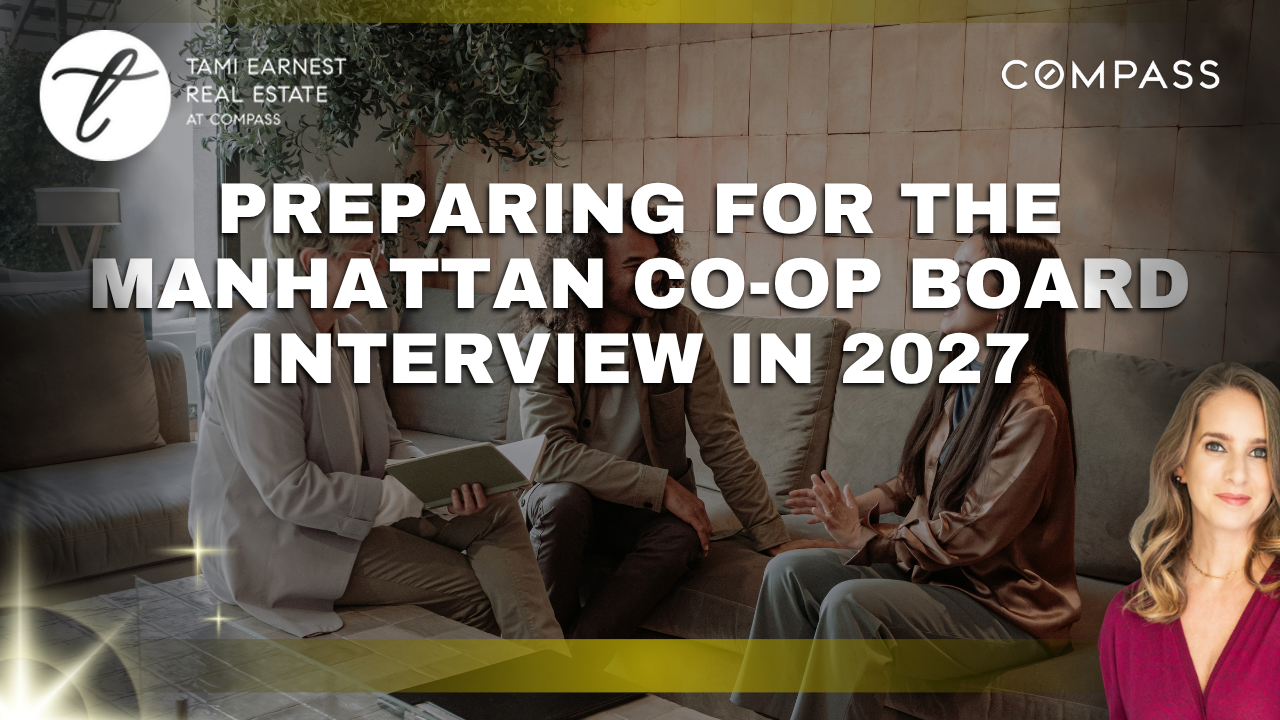
Preparing for the Manhattan Co-op Board Interview in 2027

Home › Blog › Preparing for the Manhattan Co-op Board Interview in 2027
Buyer Guide
Manhattan, NY
2027

Preparing for the Manhattan Co-op Board Interview in 2027

The Manhattan co-op board interview is the most personal and least familiar step in a co-op purchase. Here is how to prepare for it — what boards are looking for, common questions, and how to present your situation effectively.

TE
Tami Earnest — Licensed Real Estate Salesperson, Compass
Published • Updated

How should Manhattan co-op buyers prepare for the board interview in 2027?

The Manhattan co-op board interview typically runs 30-60 minutes and is conducted by 2-5 board members in the building. The board is assessing whether you'll be a good neighbor and shareholder — not conducting a financial re-review of your package. Effective preparation includes reviewing your package so the numbers are fresh, knowing the building's basic rules and structure, and approaching the conversation as professional and genuine rather than polished and rehearsed. Boards respond better to authentic answers than to clearly prepared talking points.

The co-op board interview is a professional conversation with your prospective neighbors. Here is how to prepare for it effectively.

What the Board Is Actually Evaluating

Understanding what a co-op board is trying to learn from the interview changes how you prepare for it. The board has already reviewed your financial package — they're not re-examining your tax returns. They're assessing:

Stability: Does this person seem like they'll be in this apartment for a meaningful period? Co-op boards prefer shareholders who intend to stay, pay maintenance reliably, and be part of the building community over time. Framing your purchase as a long-term decision (even if you're uncertain privately) is appropriate — most purchase decisions are long-term in intent even if circumstances change.

Community fit: Will this person be a good neighbor? Questions about your schedule, lifestyle, social patterns, whether you have pets, whether you play musical instruments, and what you're looking forward to about living in this building are all community-fit questions. Answer them honestly and specifically — vague answers signal that you haven't thought about the community, which is the opposite of what the board wants to see.

Financial clarity: Do you understand what you're buying into and can you clearly explain your financial situation? If there's anything unusual in your financial package — a gap in employment, a large one-time income event, an unusual asset structure — be prepared to explain it clearly and confidently. Boards are more concerned by evasiveness about financial issues than by the issues themselves.

For the full board package that precedes this interview, see the Manhattan co-op board package and closing process.

Common Board Interview Questions — And How to Answer Them

The questions that come up most often in Manhattan co-op board interviews, and what effective answers look like:

"Tell us about yourself and what you do professionally." This is an opening, not a test. Give a clear, concise professional summary (2-3 sentences), then add a sentence about why you're making this purchase at this stage of your life. Keep it conversational.

"Why this building specifically?" Boards want to hear that you've chosen their building deliberately, not as a default. Know 2-3 specific things about the building that you genuinely appreciate — the architecture, the location, the community, the building's history. Generic answers ("It's a great location") signal you haven't engaged with the specific building.

"How long are you planning to stay?" "Long-term" with specific reasons (proximity to work, neighborhood you love, space that meets your needs for the foreseeable future) is the right answer. Avoid anything that suggests short-term occupancy or speculative intent.

"Do you have pets?" Answer honestly. If the building allows your pets, say so and mention them specifically. If your pets are unusual or you're at the building's limit, be prepared to discuss this clearly.

"Do you have any questions for us?" Yes — always. Ask about building community, upcoming capital projects, how the building approaches maintenance decisions, or something that demonstrates genuine interest in the building's life. Not asking questions signals disengagement.

For what to do after a successful interview, see how to make a strong Manhattan offer.

Planning a move in Manhattan? Get a clear plan before you tour.

Tami Earnest has guided 1,300+ transactions across Manhattan, Brooklyn and Westchester. Book a free consultation and leave with a budget, a shortlist and a timeline built for you.

Schedule Your Consultation

Practical Preparation — What to Do the Week Before

The week before a Manhattan co-op board interview, specific preparation steps produce better interviews than general anxiety does:

Review your financial package. Know your down payment amount, your monthly maintenance and mortgage figures, and your post-closing liquidity. Boards occasionally ask about these, and stumbling over your own numbers signals disorganization.

Read the building's house rules. Most buildings' house rules cover noise policies, renovation procedures, guest policies, common area use, and move-in and move-out procedures. Demonstrating familiarity with the building's rules shows the board that you've engaged with the community you're joining.

Prepare your "why this building" answer with specific detail. Walk around the neighborhood the day before if possible. Look at the building's exterior. Note specific architectural features, amenities, or community characteristics that you genuinely appreciate. Specific answers outperform generic ones consistently.

Do not over-prepare your answers to the point where they sound rehearsed. Boards conduct many interviews and can immediately tell when a buyer is reciting prepared talking points versus having a genuine conversation. Natural, thoughtful answers — even if slightly less polished — come across better than performance.

For the closing that follows board approval, see the Manhattan co-op closing — my honest perspective.

Planning a move in Manhattan? Get a clear plan before you tour.

Tami Earnest has guided 1,300+ transactions across Manhattan, Brooklyn and Westchester. Book a free consultation and leave with a budget, a shortlist and a timeline built for you.

Schedule Your Consultation

Frequently Asked Questions

What happens at a Manhattan co-op board interview?
The Manhattan co-op board interview typically runs 30-60 minutes in the building, conducted by 2-5 board members. The board assesses stability (long-term intent), community fit (lifestyle, neighbor compatibility), and financial clarity (ability to explain your situation clearly). Common topics: professional background and why this purchase now, why this specific building, intended length of stay, pets, lifestyle questions, and questions for the board. The financial package has already been reviewed — this is a conversation, not a financial re-examination.
What should I wear to a Manhattan co-op board interview?
Business casual is appropriate for most Manhattan co-op board interviews. Professional dress signals respect for the process and the board. Excessively formal (full suit in a casual building) or excessively casual (weekend clothes) are both slightly off. When uncertain, business casual — a jacket or blazer, polished shoes — reads well across the range of Manhattan buildings.
What questions should I ask the co-op board at my interview?
Ask questions that demonstrate genuine engagement with the building: What capital projects are planned or under consideration in the next 5 years? How does the board typically handle maintenance issues between shareholder and building responsibility? What is the building community like — are there building events or a strong neighbor community? What do you enjoy most about living in this building? These questions signal that you're choosing this building deliberately and thinking about long-term membership.
How long does it take to hear back from a co-op board after the interview?
Most Manhattan co-op boards vote at or shortly after the interview and notify the managing agent within 1-2 weeks of the interview date. Some boards vote at their next scheduled monthly meeting if the interview was between meetings. The managing agent typically notifies the seller's attorney within a day of the vote, who then notifies the buyer's attorney. Timeline from interview to notification: typically 3-14 days.
What makes a co-op board reject someone after a good interview?
Board rejections after apparently good interviews typically reflect a financial concern that the board discussed in private after the interview — a detail in the financial package, a question about income stability, or post-closing liquidity that was marginal. Boards are not required to explain rejections. If you receive a rejection that surprises you, discuss with your attorney and agent whether the building's financial standards were fully met before the application was submitted.
Navigating a Manhattan Purchase?
From offer through closing, I can give you a direct read on what to expect and how to position yourself at each stage.

Get in Touch

The Manhattan co-op board interview runs 30-60 minutes and assesses stability, community fit, and financial clarity — not a re-examination of the package already reviewed. Prepare specifically for 'why this building' (with genuine detail), professional background summary, intended length of stay, and questions for the board. Review your financial package so the numbers are fresh. Read the house rules. Avoid over-rehearsed answers — boards prefer authentic conversation to prepared talking points. The week before is for specific preparation, not generalized anxiety.

A co-op board interview goes best when you've engaged genuinely with the specific building and community you're joining — the preparation shows in the specificity of your answers.

Tami Earnest is a Licensed Real Estate Salesperson with Compass, serving Manhattan, Brooklyn, and Westchester County. 15+ years, 1,300+ transactions, $164M+.
View full profile →

Tami Earnest

Tami Earnest
Licensed Real Estate Salesperson
Compass | Manhattan · Brooklyn · Westchester

Contact Tami
202.528.4215

Sources and further reading

Official data and reference pages for the topics covered in this article:

Check out this article next
Navigating the Inspection and Post-Inspection Negotiation in Manhattan

Navigating the Inspection and Post-Inspection Negotiation in Manhattan

Home › Blog › Navigating the Inspection and Post-Inspection Negotiation in ManhattanBuyer GuideManhattan, NY2027Navigating the Inspection and Post-Inspection Negotiation in ManhattanManhattan inspections and post-inspection negotiations…

Read Article